
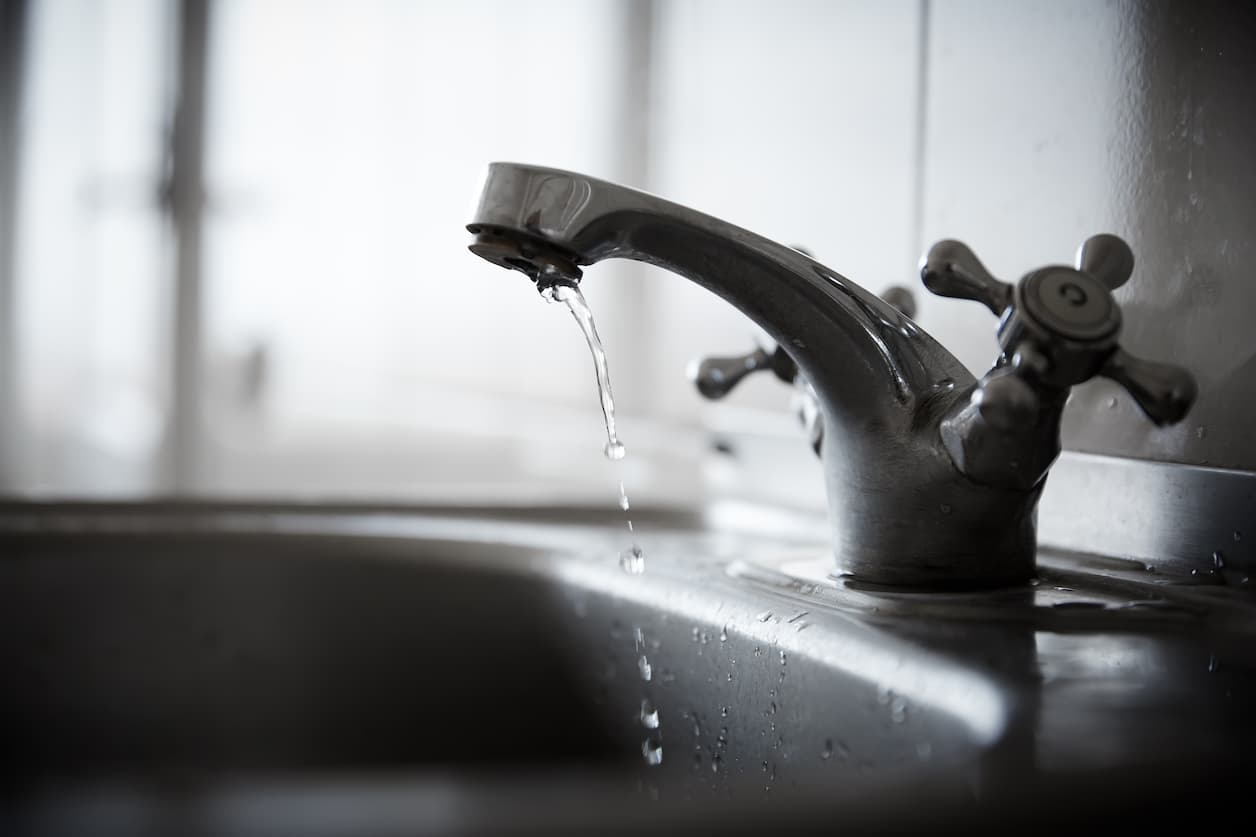
Whether it’s a faucet that is dripping profusely or otherwise malfunctioning, these clever tips can help mend any leaky faucet!
1. Turn off the faucet aerator
If your faucet’s aerator is left on, this could allow old water to get trapped between two prongs of metal. Ultimately resulting in a leaky faucet!
To remedy this issue, locate the handle with one hand while grasping the faucet’s base with the other. Twist it counterclockwise to disconnect the aerator from its seat and then remove it as well, all without detaching its base (hint: if necessary you can use pliers).
Once that’s done, twist the knob back into place along with the aerator and run cold water through your system before turning on the hot-water spigot.
2. Clean out your faucet handle
To avoid corrosion and other problems, it’s essential to clean out the faucet handle regularly. The spout is where contact with water occurs; however, any food particles or residue left behind can obstruct its functionality. Therefore if this area becomes encrusted over time it may not provide an optimal seal with pipeline walls, leading to leakage!
To remedy this issue, use an old cloth to wipe out any grime clinging to the faucet components.
3. Remove the flow restrictor if your faucet has one
If your faucet has a restrictor, you may not hear any dripping. In such instances, don’t fret! Simply remove it and allow the water to flow freely through its channels without obstruction.
If you have an undersized restrictor, such as one that’s ⅜ inch in diameter, be sure this is also removed before proceeding with your repair job. If your restrictor is larger than ¾ inch in size then simply leave it in place. However if it’s smaller than ½” then removing it won’t impact functionality when those channels are open for business again!
4. Use a pipe snake or plumbing clamp to tighten up loose pipes
If you cannot locate the leak, a pipe snake can be used to locate where it is emanating from. This tool resembles a snake and has an array of suction cups along its length. When it comes in contact with water, they create a seal around the leaky faucet, thus preventing any more water from escaping!
If you find yourself unable to access the source of your leaky faucet, then consider employing a plumbing clamp instead. These are typically less expensive alternatives that can provide similar but not equivalent benefits.
5. Call a plumber
For any plumbing issue, a qualified technician should be your first port of call. Depending on the nature of the problem, they may need to employ specialized tools in order to rectify it.
If you’re seeking assistance with a problematic faucet or sink drain, consider calling an expert plumber rather than attempting to tackle them yourself.
Conclusion
When it comes to faucets, don’t let the word “leaky” fool you. They can be a real eyesore, not only rendering your bathroom space unsightly but also creating a potentially hazardous situation by leaking water. That’s why we’ve collected a host of ingenious solutions that will help alleviate this issue in no time!
